Hemingway's rewriting of The Sun Also Rises in Schruns
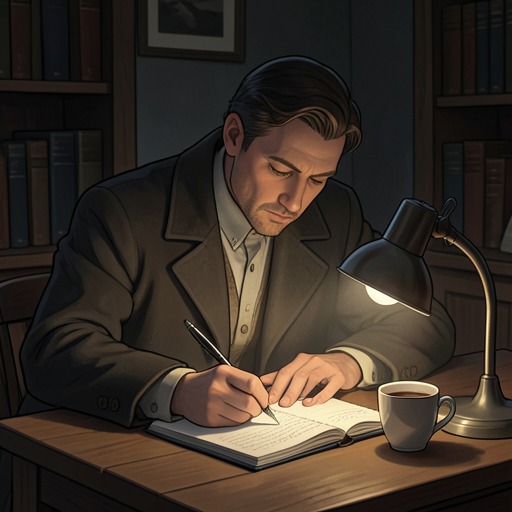
A Moveable FeastErnest Hemingway's rewriting of The Sun Also Rises in Schruns was the decisive work that transformed a first draft written in a six-week sprint into a novel. In the winter of 1925–1926, he revised the manuscript in stages, protecting the work from outside comment until he had finished shaping it; the process was, by his account, the most difficult rewriting job he had ever done.
Background and Decision to Work Alone
In the fall of 1925, F. Scott Fitzgerald was upset that Hemingway would not show him the first-draft manuscript. Hemingway explained that it would mean nothing until he had gone over and rewritten it, and that he did not want to discuss or show it to anyone first. The disagreement was not a break in their friendship so much as a boundary around the work: Fitzgerald wanted to help, but Hemingway wanted to revise without that help while the book was still taking shape.
The plan was to go to Schruns in Vorarlberg, Austria, as soon as the first snow fell. The timing placed the work in the winter of 1925–1926, and the change of setting coincided with the change in the manuscript's purpose: what had begun as a rapid first draft now had to be made into a novel through sustained revision.
Stages of the Rewriting
Hemingway rewrote the first half of the manuscript in Schruns and thought he finished that stage in January. He then took the work to New York and showed it to Max Perkins of Charles Scribner's Sons. Afterward, he returned to Schruns to complete the rewriting. Only once the manuscript had been fully rewritten and cut was it sent to the publisher, at the end of April.
The sequence matters: the visit to New York did not end the work, and the manuscript shown to Perkins was not yet the final version. Hemingway returned to Schruns to finish, then sent the completed, cut text onward. Fitzgerald did not see it until after that submission. Hemingway later remembered joking with him about the delay, and Fitzgerald was then anxious to help, as he always was once a piece of work was done.
Difficulty and Retrospective Meaning
Hemingway described the task as the most difficult rewriting he had ever done. The contrast with the first draft is stark: six weeks of rapid composition had produced the material, but turning it into a novel required a winter of reconsideration, cutting, and revision. Schruns was therefore not merely where he continued writing; it was where the manuscript underwent its essential transformation.
The memoir also preserves a limit to what Hemingway could later recall. He could not remember which stories he wrote in Schruns, though he remembered that there were several and that some turned out well. By contrast, he identifies the work on The Sun Also Rises precisely: its six-week first draft, the rewriting of its first half, the January trip to New York, the return to Schruns, and the completed manuscript's dispatch at the end of April. That difference in remembered detail gives the novel's revision a clear place in his account of the winter.